
A Dog’s Nose: The Science Behind Canine Scent Detection Training
Canine scent detection training teaches dogs to recognize specific target odors and distinguish them from the many other scents in their environment. These same scent training principles are used in food allergy detection, including gluten and other food allergen detection. Understanding how dogs recognize odors, discriminate between target and non-target scents, and generalize an odor across different samples is an important part of developing reliable detection skills. A dog’s extraordinary sense of smell makes this specialized detection work possible.

Anira demonstrating scent detection by alerting to the trained gluten target odor in a package of Pop-Tarts.
How Does a Dog’s Sense of Smell Work?
A dog’s nose is specially adapted to collect and process odor information. When a dog sniffs, a portion of the inhaled air is directed toward the olfactory region of the nasal cavity, where odor molecules interact with specialized sensory receptors. The structure of the canine nose and its airflow allows dogs to continually sample odors as they investigate their environment. Dogs can also compare odor information entering each nostril, helping them determine the location of an odor source. This highly developed olfactory system is the biological foundation that makes canine scent detection and scent detection dog training possible.
What Is a Dog Actually Smelling?
When a detection dog investigates a target, the dog is responding to odor molecules in the air, often volatile organic compounds (VOCs) released by the material. Many real-world odors are complex mixtures rather than a single identifiable scent. Dogs may learn to recognize particular components or an overall odor pattern associated with the trained target. This distinction is important in detection dog training because a dog may successfully recognize a target odor even when scientists do not yet know exactly which individual compound or combination of compounds the dog is using to make that identification.
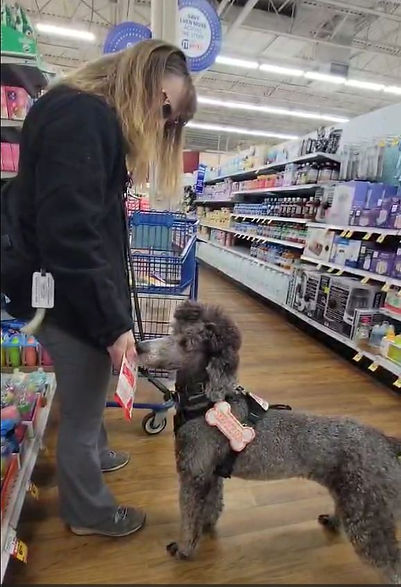
Anira showing a freeze for an all-clear of no gluten
How Do Detection Dogs Learn a Target Odor?
Detection dogs learn through associative learning and positive reinforcement. During scent training, the dog learns that recognizing the correct target odor and performing the desired behavior leads to a reward. As training progresses, non-target scents are introduced so the dog learns to discriminate between the target odor and other odors that may be present. Research also shows that training with appropriate variations of a target can be important because a dog that learns only one specific sample may not automatically recognize every variation of that target. Building both strong discrimination and appropriate generalization is an important part of developing reliable scent detection skills.
Why Positive Reinforcement Matters in Detection Dog Training
How a detection dog is trained can influence both learning and performance. Positive reinforcement teaches the dog that correctly identifying a target odor and performing the desired alert leads to something rewarding, such as food, play, or another valued reinforcer. Research with detection dogs has also shown benefits from using a precise marker, such as a clicker, to immediately communicate when the dog has made the correct choice. In a 2025 study, detection dogs trained with a marker followed by a reward required fewer trials during the final stage of odor detection training, performed their alert behavior more accurately, and indicated the location of the odor source more precisely than dogs trained with the reward alone. This supports the importance of clear communication, accurate timing, and positive reinforcement when developing reliable scent detection skills.
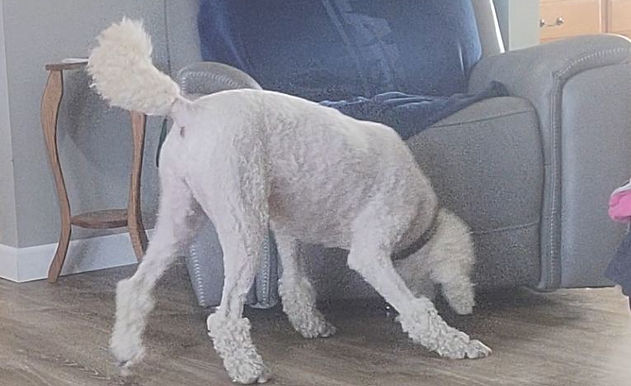
Luna using her trained scent detection skills to search a room for the target gluten odor.
Why Detection Dogs Need to Learn Different Variations of an Odor
A target odor is not always exactly the same. Its odor profile can change because of concentration, age, manufacturing differences, environmental conditions, other ingredients, and surrounding odors. For a detection dog to work reliably in real-world situations, the dog needs to learn that appropriate variations can still represent the same target. This ability is called odor generalization. Research suggests that training with multiple appropriate examples of a target odor can help broaden a dog's ability to recognize variations, while careful use of non-target samples teaches the dog which odors should not produce an alert. Finding the right balance between generalization and discrimination is an important part of developing reliable scent detection skills.
Why Odor Concentration Matters in Detection Dog Training
Detection dogs do not automatically recognize a target odor at every possible concentration. Research has shown that the concentration used during training can influence the dog's ability to recognize both stronger and weaker presentations of the same odor. This is especially important when training dogs for tasks where very small amounts of a target may need to be detected. In one controlled study, dogs that were systematically trained with progressively lower odor concentrations later detected concentrations approximately 100 times lower than dogs that continued training only at the original concentration. This demonstrates why training specifically for low-concentration and trace-odor detection is important rather than assuming that a dog trained on a larger amount will automatically recognize extremely small amounts.

Luna using scent detection to check a plate of food for a trained allergen target odor.
How Are Dogs Trained for Medical Scent Detection?
Medical scent detection provides another well-studied example of dogs learning to discriminate complex odor profiles. Although this differs from food allergy detection training, the research helps demonstrate how dogs can learn to identify specific odor patterns. Medical detection dogs are trained to recognize odor changes associated with specific biological or medical conditions. Changes occurring within the body can alter the mixture of volatile organic compounds (VOCs) released through breath, sweat, urine, and other biological samples. Researchers often describe the complete collection of these volatile compounds as the volatilome. Through carefully controlled scent training, dogs can learn to discriminate samples associated with a particular condition from control samples. Research has investigated canine scent detection for a variety of medical applications, including cancers, infectious diseases, and other changes in human health. However, scientists do not always know the exact individual compound or combination of compounds the dog is using to make that distinction, which is why careful sample selection, controls, training methods, and testing are important.
Can Dogs Smell Changes in the Human Body?
Changes occurring inside the human body can also change the odors the body produces. Metabolic processes create volatile organic compounds (VOCs) that may be released through breath, sweat, urine, and other biological materials. Research has shown that trained dogs can discriminate odor samples associated with certain changes in health. One example is diabetic alert dogs: controlled studies have demonstrated that dogs can learn to recognize and alert to odor samples collected during hypoglycemia. Researchers have also identified differences in the VOC profiles of breath associated with changes in blood glucose. These findings help demonstrate that medical scent detection is based on detectable changes in odor not a mysterious “sixth sense.”
The Science Behind Reliable Detection Dog Training
A dog’s extraordinary sense of smell is only part of what makes a successful detection dog. Reliable scent detection also depends on how the dog is trained. Research shows the importance of carefully teaching target odor recognition, discrimination, generalization, varying concentrations, and appropriate responses to non target odors. Training methods and previous experience can influence how a dog responds when the target odor changes or is encountered in a new environment. At Gluten Detected Service Dogs, these science-based principles guide our positive reinforcement approach to food allergy detection training, including gluten detection, food allergen detection, and alpha-gal-related scent targets.
Through personalized, one-on-one Zoom sessions, owners learn how to teach their dogs target odor recognition, accurate alerts, and discrimination between target and non-target odors.
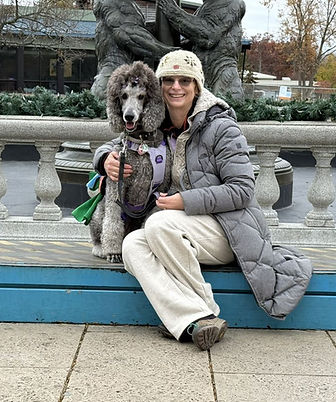
Anira and her handler — building trust, communication, and teamwork is an important part of successful detection dog training.