
Owner-Training a Gluten Detection Service Dog: What to Expect

Updated: Sep 12
Owner-training a gluten detection service dog allows you to take an active role in your dog’s training while learning the skills needed to build and maintain reliable scent detection and service dog behaviors. With guidance from an experienced professional trainer, owner-handlers learn not only how to teach their dog, but also how to recognize correct responses, use good reinforcement timing, troubleshoot challenges, and communicate clearly with their dog throughout the training process.
In this article, I’ll explain what owner-handlers can expect during gluten detection service dog training, including choosing an appropriate dog, learning scent detection skills, developing reliable alert and all-clear behaviors, practicing in real-world environments, and building the handler skills needed for a successful working partnership.
Choosing the Right Dog for Owner-Training
Successful owner-training starts with choosing a dog that has the temperament, motivation, confidence, and ability to work closely with their handler. Breed can influence certain traits, but the individual dog is more important when determining whether a dog is a good candidate for gluten detection service dog training.
While breeds with strong scenting abilities often excel, the most important qualities are:
Confidence
Desire to work
Food or toy motivation
Ability to focus
Good health
Stable temperament
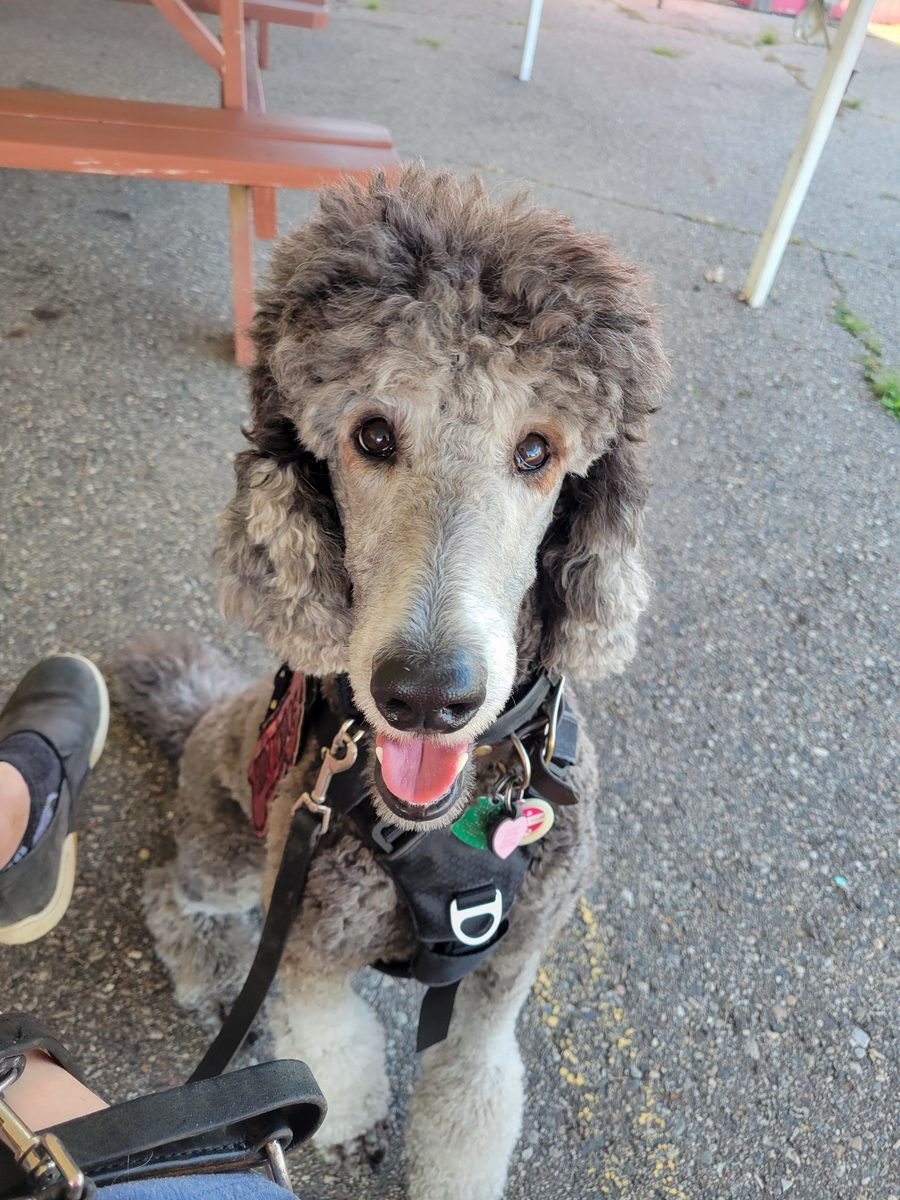
"Trainer's Tip: We begin distraction training at home, where the environment can be carefully controlled. Gradually introducing sounds, movement, and other distractions helps prepare a service dog to remain calm and focused before practicing in more challenging public environments.
Learning Good Reinforcement and Reward Timing
One of the most important skills an owner-handler develops during training is good reinforcement timing. Dogs learn through the consequences of their behavior, so the handler needs to clearly communicate when the dog has given the correct response. Rewarding at the right moment helps the dog understand exactly which behavior earned the reinforcement. As training progresses, handlers learn to recognize subtle changes in their dog’s behavior and improve their timing so communication becomes clearer and more consistent.
Trainer’s Tip: Good timing is one of the most important skills an owner-handler can develop. Reinforce the correct behavior as it happens so your dog can clearly connect their response with the reward. Even a short delay can make it less clear to the dog which behavior earned the reinforcement. As your timing improves, communication between you and your dog becomes clearer and more consistent.
Learning to Recognize Your Dog’s Alert Behavior
Once your dog reliably recognizes the trained gluten target odor, the next step is teaching a clear and consistent alert behavior. The alert should be easy for the handler to recognize and should clearly communicate when the dog detects the target scent.
As your dog begins developing a reliable alert behavior, you’ll also learn how to recognize exactly what that response looks like. A clear alert is important, but owner-handlers must also learn to read their dog’s body language, distinguish an actual alert from other behaviors, and respond consistently when the dog correctly identifies the trained gluten target odor.
Depending on the individual dog, an alert response might include:
Body freeze
Look up with eye contact
Look away
Nose boop
Play bow
The alert should be consistent, easy to recognize, and never damage the food.
Learning to Recognize Your Dog’s All-Clear Response
As your dog develops a reliable alert, you’ll also learn to recognize what they do when the trained gluten target odor is not present. Whenever possible, I allow the dog to naturally choose their own all-clear behavior rather than immediately teaching a specific response. As the owner-handler, you’ll learn to identify that natural response and reinforce it consistently so it becomes clear and reliable. This helps create two-way communication, allowing you to recognize both when your dog detects the trained target odor and when they do not.

"Trainer's Tip" Having a dog being able to work in a very noisy environment is very challenging but having a dog trained to not eat a delicious plate of food take a lot of restraint. We start this training at home with small amounts of food and work up to a dinner plate.

Understanding Odor Discrimination and Real-World Food Checks
Odor discrimination is an important part of gluten detection dog training because your dog must learn to distinguish the trained gluten target odor from the many other scents encountered around food, ingredients, and packaging. During owner-training, you’ll learn how to present target and non-target samples correctly, observe your dog’s responses, and reinforce accurate decisions without unintentionally giving your dog clues.
During this stage, owner-handlers learn how to:
Present target and non-target samples correctly
Recognize subtle changes in their dog’s behavior
Reinforce accurate alerts and all-clear responses with good timing
Avoid unintentionally cueing the dog toward the correct answer
Gradually increase distractions and difficulty as the dog progresses
As training progresses, exercises gradually become more challenging while the owner-handler learns how to maintain consistency, evaluate the dog’s responses, and adjust the difficulty without rushing the training process.
Building Reliable Skills in Real-World Environments
As training progresses into real-world environments, both the dog and owner-handler must learn to work reliably around increasing distractions. Grocery stores, restaurants, hotels, and other public settings introduce new food odors, people, sounds, surfaces, and scent presentations. Owner-handlers learn how to support their dog without interfering with the scent search, recognize accurate responses, use good reinforcement timing, and determine when their dog is ready for more challenging environments.
Owner-handlers gradually learn to work with their dog in environments such as:
The home and other controlled environments
Grocery stores and other food-shopping environments
Restaurants and dining settings
Hotels and unfamiliar locations
Other public environments the service dog may encounter in everyday life.
Practicing in a variety of environments helps both the dog and owner-handler learn to work together reliably, while giving the handler experience recognizing when their dog is focused, confident, and ready to progress to more challenging situations.
Maintaining Your Dog’s Skills Over Time
Owner-training doesn’t end when your dog begins working reliably. Both the dog and handler need continued practice to maintain their skills. Regular training gives you opportunities to reinforce accurate alert and all-clear responses, maintain good handler timing, and recognize changes that may indicate a skill needs additional practice. Working with varied samples, environments, and scent presentations also helps maintain reliable scent detection skills over time.
How Long Does Gluten Detection Dog Training Take?
Owner-training a gluten detection service dog is a long-term commitment. The complete training process typically takes approximately 1.5 to 2 years, although the timeline varies depending on the individual dog, handler, training schedule, and goals. During that time, the owner-handler is learning alongside the dog—developing scent detection handling skills, reinforcement timing, communication, obedience and public access skills, and the ability to maintain the dog’s training over time.
Can You Train Your Own Gluten Detection Service Dog?
Yes. With professional guidance, many owner-handlers can learn to train their own gluten detection service dog. Owner-training can be an option for people seeking gluten detection or celiac service dog training who want to be actively involved in the process. Along the way, you learn how to build and maintain your dog’s scent detection, alert, all-clear, public access, and service dog skills over time.
Final Thoughts
Owner-training a gluten detection service dog is about more than teaching the dog to recognize a scent. The handler must also learn good timing, clear communication, how to read their dog’s behavior, how to avoid unintentionally cueing responses, and how to maintain reliable skills over time. Through personalized online coaching, I guide owner-handlers through this process while adapting training to the individual dog and handler team.


Comments